- SAVE America Act passes the House to safeguard the integrity of our democratic process
- Attorney General Pam Bondi testifies before the House Judiciary Committee
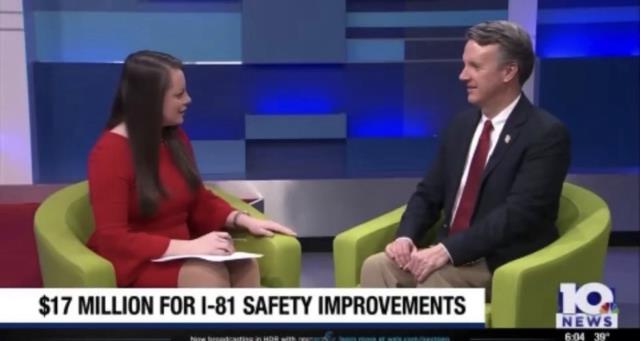
- Discussed with local media about the additional $17 million secured for I-81 widening
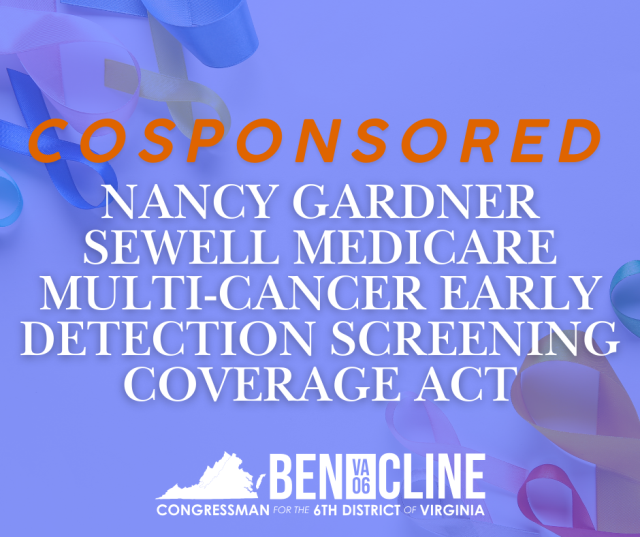
- Cosponsored a bipartisan bill to increase access for Medicare recipients to receive early cancer detection
Safeguarding Our Elections with the SAVE America Act
The right to vote is the most fundamental privilege of American citizenship, and protecting that right is a constitutional obligation. Yet in recent years, Democrats have failed to take common sense steps to ensure that only eligible American citizens cast ballots in our elections. The American people know that securing the integrity of our elections is not an extreme position. Despite overwhelming public support, 213 House Democrats could not agree on the basic principle that voters should verify their identity before casting a ballot. Regardless of party, Americans want their election safeguarded; the numbers prove this very fact. Surveys show that 83% of Americans support requiring a photo ID to vote, including 71% of Democrats, 82% of Hispanic Americans, and 76% of Black Americans. These numbers demonstrate that voter ID is not a partisan issue.
This is exactly why I cosponsored the SAVE America Act, which passed by the House last week. Our elections demand commonsense safeguards. Not even one illegal vote should ever cancel out the voice of a citizen. The SAVE America Act requires proof of citizenship for voter registration. This legislation includes a voter ID requirement to register to vote. Our democratic process depends on free, fair, and secure elections. Americans must have full confidence that their votes carry equal weight and that our elections are protected from abuse. Allowing individuals to vote without verifying their identity diminishes the voices of lawful voters and opens the door to illegal aliens influencing our elections. Requiring voter ID is simple, reasonable, and consistent with everyday practices. Americans already show identification to open a bank account, drive a car, board an airplane, or purchase a home. Election integrity should meet the same standard. Now the bill moves to the Senate, where it awaits consideration. The American people deserve to hear a full debate and know where their senator stands on this basic commonsense principle.
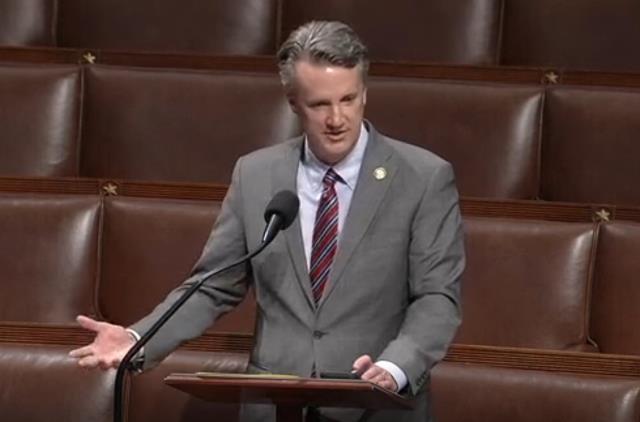
Watch me speak in favor of the bill here.
Hosted Attorney General Pam Bondi for Judiciary Committee
This week on the House Judiciary Committee, I questioned Pam Bondi during oversight of the Department of Justice about public safety and the tools law enforcement need to keep Virginians safe. As she made clear, one of the most dangerous MS-13 gang members in the country was hiding in our Commonwealth, and the 287(g) partnership helped lead to his capture by working hand in hand with U.S. Immigration and Customs Enforcement and local officers. I raised serious concerns that ending these agreements under Governor Abigail Spanberger strips law enforcement of a proven resource, which was rescinded in a matter of days upon her taking office. When cooperation between federal and state authorities is dismantled, it is the people of Virginia who bear the dire consequences of that policy shift. Attorney General Bondi is doing critical work to restore the rule of law, back the men and women on the front lines, and ensure states have the resources they need from the federal government to drive crime rates down. Her focus on enforcement has been proven to help communities like our own, and I hope the Governor reconsiders her elimination of this critical partnership.
In addition, I also questioned Attorney General Bondi about the ongoing federal registration requirement for firearm suppressors. Recently, my provision included in H.R. 1 eliminated the unconstitutional $200 NFA tax on suppressors. However, law-abiding Americans are still required to register these items with the federal government, which seems inconsistent now that there is no longer a tax. I asked whether, absent the $200 tax, a continued registration requirement is justified and that if citizens are no longer paying a fee, why should the burdensome registration remain? Congress must ensure that federal policy is coherent. I hope to see that the remaining federal registration requirement on suppressors is eliminated so the law fully reflects congressional intent and eases this burden on law-abiding citizens.

Watch moments from the hearing here.
Local Media Highlights I-81 Funding
Interstate 81 is the backbone of western Virginia’s economy and one of the most important freight corridors on the East Coast. Last week, I had the pleasure of speaking with several members of the local media to highlight the progress we have made and the targeted funding I secured through the transportation appropriations bill to support improvements along this critical route. For years, our local community has called for meaningful upgrades to address congestion on this crowded interstate and this investment is an important step toward delivering long overdue solutions. The funding I secured will be directed to the Commonwealth, which will ultimately determine which specific projects receive these targeted resources based on the most urgent needs and long-term planning priorities. That partnership ensures decisions are made closest to the communities affected while still delivering strong federal support to move these improvements forward.
The impact will be felt across the region, from Winchester to Bristol, where expanding capacity and modernizing infrastructure along I-81 will help first responders, commuters, and the trucking industry alike while positioning the Shenandoah Valley and Southwest Virginia for continued growth. I will keep fighting to ensure our Commonwealth receives the investments it needs, and I remain committed to working with state and local partners to deliver funding for improvements on I-81 that keep Virginia moving forward. Check out my Facebook page to see all the media highlights from last week and read my op-ed in Cardinal News on this $17 million funding.
Making the American Dream More Attainable
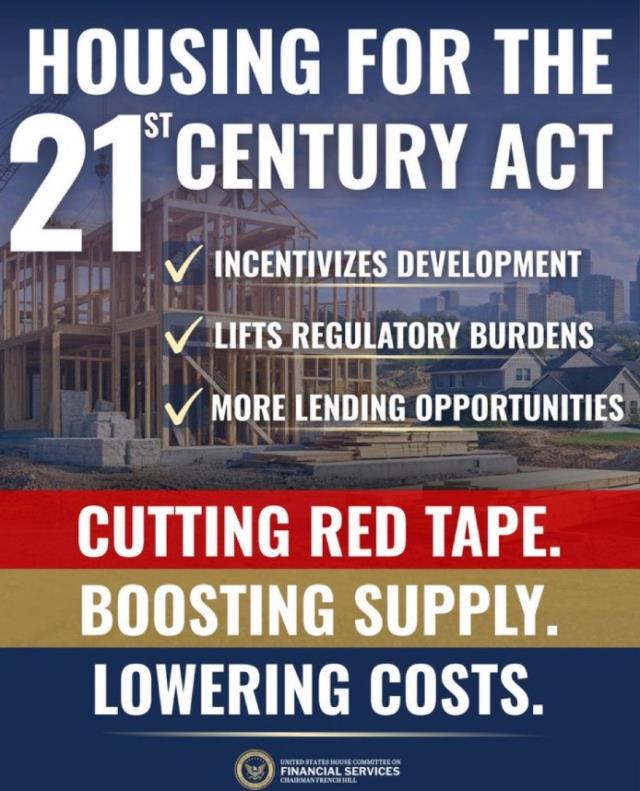
The goal of homeownership remains a cornerstone for millions of Americans across the country. Currently, the supply of homes has not kept up with demand, leaving the nation short by as many as 5.5 million homes. Rising construction costs, regulatory delays, and outdated zoning rules have made it even harder to build new homes. Additionally, small and medium-sized banks that provide construction loans are struggling due to complicated regulations. Last week, I voted in favor of the bipartisan Housing for the 21st Century Act, which is designed to increase the supply of homes, such as single-family homes, apartment buildings, and other factory-built housing. This legislation eliminates unnecessary red tape, modernizes federal housing programs, and streamlines banks’ ability to offer construction financing.
The bill expedites the construction of new homes by allowing builders to utilize pre-approved home designs, flexibility which accelerates the permitting process. It also modernizes and streamlines federal and local housing procedures, supporting both rural and urban communities in expanding the availability of affordable homes. The Housing for the 21st Century Act also revises HUD programs to accelerate homebuilding and broaden financing options. The bill strengthens local banks’ capacity to issue housing loans by expanding access to stable deposits for community and rural banks, enabling them to better support households, farmers, and small businesses. Additionally, it provides regulators with the flexibility to address banking challenges without adversely impacting local communities. The Housing for the 21st Century Act is a comprehensive plan that will make it easier to build homes, providing Americans with more affordable housing choices nationwide.
Increasing Early Cancer Screening Detection
Too many cancers are detected only after they have progressed to advanced stages when treatment options are limited and outcomes are far more difficult for patients. Currently, 70% of cancer deaths occur from cancers that have no recommended screening, meaning there are no standard tests to detect them before symptoms appear. Under current law, it could take more than a decade before Medicare gains the authority to cover the cost of new screenings. These screenings are medical tests designed to find cancer before symptoms develop. Medicare coverage would only begin once the tests are approved by the U.S. Food and Drug Administration (FDA). The Nancy Gardner Sewell Medicare Multi-Cancer Early Detection Screening Coverage Act addresses this by creating a pathway for Medicare to cover multi-cancer early detection (MCED) screenings. These tests can detect multiple types of cancer at once and would be covered once approved by the FDA.
As a co-sponsor, I supported this bipartisan legislation because it provides a much-needed solution for Medicare by addressing a current gap in coverage for multi-cancer early detection tests. This ensures greater access to earlier detection for patients and improves outcomes by catching cancer before it metastasizes and becomes more fatal. The legislation supports cutting-edge science while preserving an evidence-based process to guarantee that these screenings are safe for patients. Now that the House has passed this legislation, I look forward to the Senate taking it up so that more Americans can gain access to lifesaving early cancer detection.
Washington Highlights of the Week
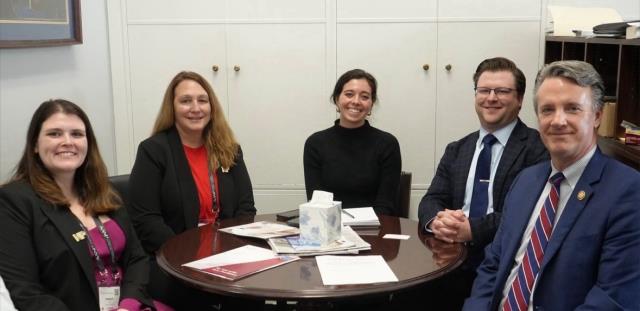
I was honored to meet with representatives from the American Association of Nurse Practitioners (AANP) this week. During our meeting, we discussed ways Congress can better support the more than 461,000 nurse practitioners licensed across our country.
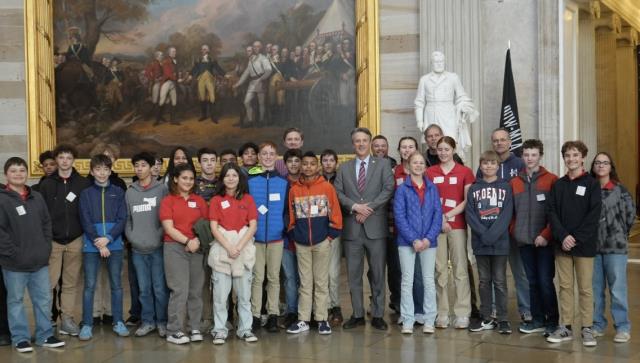
It was great to meet with bright students from Shenandoah Valley Adventist in New Market and answer their questions about our legislative process while they were visiting Washington.
