- Two bipartisan bills passed the House to uplift Main Street
- The House completed all 12 critical appropriations bills
- I joined Tim Young to discuss the newly released Reconciliation 2.0 platform
- Helped a constituent navigate IRS loopholes and secured the tax return she was owed
Strengthening Main Street and Local Economies
Main Street is the backbone of America and the heart of our local communities. Supporting small businesses and ensuring their voices are heard in Washington has always been a priority of mine. Last week, the House advanced two important bipartisan bills designed to strengthen Main Street, expand opportunities for entrepreneurs, and help small businesses grow and compete across the country. The first bill, the Main Street Parity Act, aims to level the playing field for small business owners. It modernizes the Small Business Administration’s (SBA) 504 loan program by removing an outdated requirement that forced certain businesses operating on limited or single-purpose properties to contribute additional equity. By standardizing these requirements, the bill ensures fair and equal treatment for all industries, lowers barriers for new entrepreneurs, encourages investment in local infrastructure, and strengthens businesses in towns and cities nationwide. This legislation is about giving small businesses the ability to succeed without unnecessary hurdles standing in their way.
The second bill, the AI for Main Street Act, prepares small businesses for the future of our economy. It directs the SBA's Small Business Development Centers to provide guidance, training, and resources to help entrepreneurs responsibly adopt and use artificial intelligence in their operations. This legislation ensures that small business owners are not left behind as new technologies reshape the economy, providing them with the tools to grow their businesses, create jobs, and better serve their communities. It is about empowering people and businesses to leverage new technology while maintaining the personal touch and human leadership that define Main Street. By enacting these bipartisan measures, Congress is reaffirming a clear commitment to America’s small businesses and to the job creators who drive our local and national economy.
House Delivers Full-Year FY26 Funding with 12 of 12 Appropriations Bills Passed
House Republicans have achieved a major victory by completing all twelve Fiscal Year 2026 appropriations bills without a bloated omnibus or another continuing resolution. These bills provide full-year funding, lower overall spending compared to the current continuing resolution and deliver real savings for hardworking Americans. Following a 43 day government shutdown last October, Republican lawmakers restored regular order and returned the appropriations process to a committee-focused, member-driven system, led by members who have consistently advocated for their constituents and worked for the betterment of their local communities.
H.R. 7147 provides approximately $92 billion to the Department of Homeland Security, an increase of $3.27 billion over Fiscal Year 2025. It funds agencies such as Customs and Border Protection, ICE, the Coast Guard, TSA, FEMA, and CISA. The bill reinforces President Trump’s border security policies, removes programs that previously contributed to the border crisis, and equips frontline agents with the tools they need to keep Americans safe. H.R. 7148 strengthens our military, fully funds a 3.8% pay raise for troops, invests in shipbuilding and next-generation weapons, and ensures multiyear procurement of critical munitions.
These bills fight wasteful spending from the previous administration and uphold conservative priorities. They remove harmful Biden-era restrictions on immigration enforcement, and direct resources where they are most needed, including to border, law enforcement, education, health care, and infrastructure. They advance the America First agenda by empowering frontline agents, revitalizing our military, and modernizing transportation, biomedical research, and rural health care. Legacy protections remain in place to defend unborn children, support livestock haulers, and prevent illegal aliens from receiving housing assistance. This is responsible and accountable governance achieved through careful negotiation between House and Senate Republican leaders to advance core priorities and put Americans first. Passing these appropriations bills is not just good policy, it fulfills a promise that was made to the American people.
Reconciliation 2.0: Renewing a Cornerstone of the American Dream
Congressional Republicans are taking a serious, policy-focused approach to affordability. Last week I joined podcaster Tim Young to discuss how the Republican Study Committee’s Reconciliation 2.0 framework can help deliver meaningful results for Americans across the country. For four years, the Biden Administration imposed federal housing regulations that artificially raised construction costs. These costs were passed on to American families, driving up housing prices. The American Dream of homeownership slipped further out of reach, with the average age of a new home buyer now exceeding 40 years old, not because families are unwilling to work hard, but because Democrat policies have made it harder and more expensive to build and buy a home. Federal red tape has quietly added thousands of dollars to the cost of new construction, and those costs are inevitably passed on to first-time buyers.
As President Trump said in his 2025 address to Congress, Americans have always done whatever it takes to defend their children, their country, and their freedom. Renewing that commitment means one thing: pursuing policies that make homeownership, health care, and energy affordable again. As Vice-Chair of the RSC, we are advancing a common sense framework that expands housing supply, unlocks underutilized federal property for private-sector housing and removes tax barriers that discourage home sales and first-time ownership alike. This approach empowers families to save for a home, protects American buyers from foreign speculation, and ensures parents are not penalized for choosing to raise a family on a single income. By removing unnecessary federal barriers that drive up costs, this legislation helps put homeownership back within reach for millions of Americans. I hope that this framework will come before the House for a vote so it can deliver meaningful results for the American people.
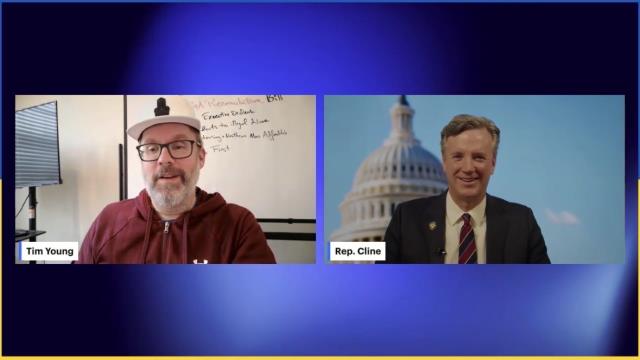
Watch my full interview with Tim Young here.
Energy Choice Act Expanding Affordable Energy for Families
American energy dominance is essential to keeping costs down, the lights on, and our economy moving. That is why I am cosponsoring the Energy Choice Act, a commonsense bill that pushes back against extreme, top down mandates that restrict access to affordable and reliable energy. Across the country, families and small businesses are paying the price when politicians block energy connections based on ideology instead of reality. This legislation prevents state and local governments from banning the installation or expansion of energy services based solely on disagreement with the energy source.
When the government interferes and picks winners and losers, energy prices rise, reliability suffers, and grid stability is put at risk. By protecting access to proven energy sources like natural gas, the Energy Choice Act helps ensure dependable power during peak demand and extreme weather, including the severe winter conditions our Commonwealth has experienced. It also gives communities the flexibility to choose what works best for their unique needs. At a time when household budgets are already stretched thin, this bill helps put consumers back in control of their energy choices. I will continue fighting for policies that strengthen American energy security and put working families first.
.png "Your_paragraph_text_(2).png")
Celebrating National School Choice Week
In Congress, I have been a strong advocate for school choice policies that put parents at the center of their child’s education. Every child learns differently, and families should have the freedom to choose the school that best meets their child’s unique needs, whether that option is a public, private, charter, or homeschool setting. During National School Choice Week, we highlight the importance of embracing these alternative educational opportunities and ensuring every family has the ability to make the choice that is right for them. In honor of this week, I was proud to cosponsor a resolution recognizing National School Choice Week. I will continue to fight for policies that give families the tools and resources they need to make the best decisions for their children’s future.
.png "National_School_Choice_Week_Rep_Ben_Cline_(1).png")
Casework Highlight
A constituent reached out to my Roanoke office seeking help with a delayed 2024 tax refund. She worked in the service industry and had been unable to file properly because she had not received her W-2, a problem she had also faced the year before. After moving, she struggled to update her address and, to no avail, was unable to get in contact with the IRS for assistance, which is when she contacted my office for help. As a single mother, this delay had placed an undue financial strain on her family. My office immediately contacted the IRS Taxpayer Advocate Service to help resolve the issue. The case moved forward and the constituent received her refund just days later. This success led to a meaningful outcome, with more than $8,700 deposited directly into her account, including over $100 in interest owed to her. Helping constituents cut through federal bureaucracy and get the assistance they deserve is a core part of my office’s work. If you or someone you know runs into trouble with a federal agency, I encourage you to contact a district office nearest to you.
Washington Highlights
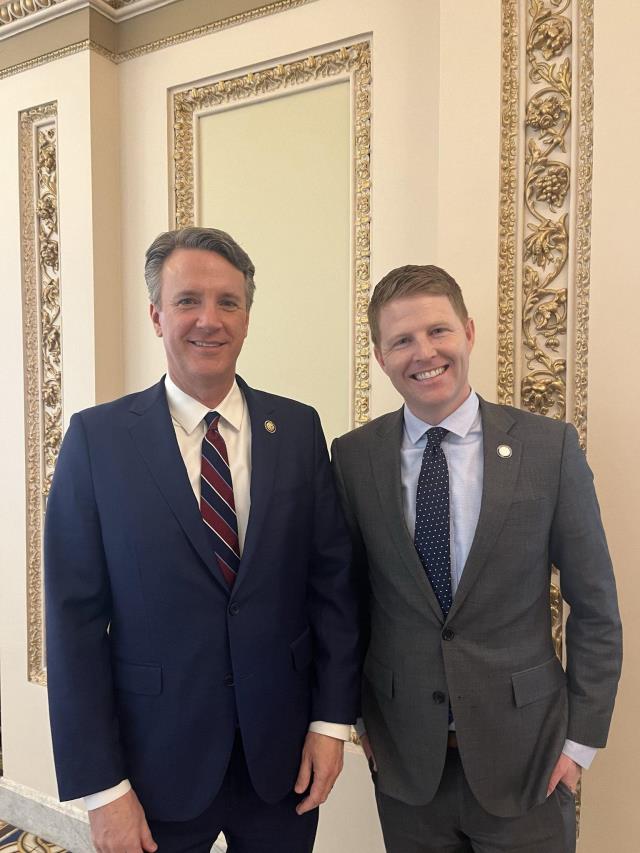
It was great to welcome Dr. David Kirkpatrick of James Madison University to the Capitol for a tour. Dr. Kirkpatrick plays a critical role at JMU as Vice President and Chief of Staff; it was an invaluable opportunity to catch up and hear an update on his work back in Harrisonburg.
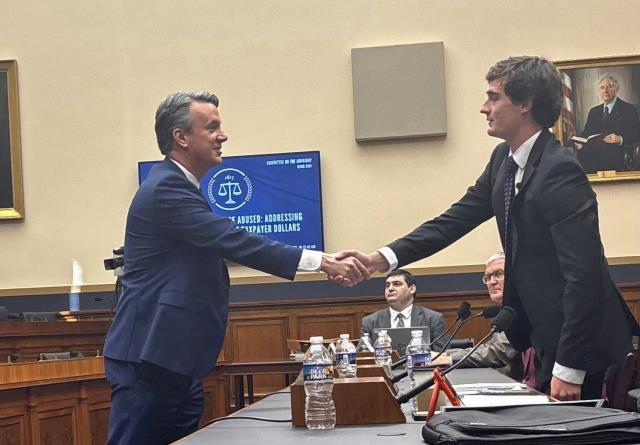
Last week, I heard from independent journalist Nick Shirley who testified to the House Judiciary Committee about rampant welfare fraud in Minnesota that stole taxpayer dollars meant for the disabled and children. We are grateful to Nick for his role in bringing these abuses to light for the American people.
